Tuesday, January 15, 2013

EXCITING NEWS!!!   PRE-ORDER for the Pop yeh yeh Compilation CD is available now! 

"Pop Yeh Yeh - Psychedelic Rock from Singapore and Malaysia 1964-1970: Vol. 1" 

  Official release is next Tuesday, Jan 22!

Here, and other various sites around the web: 

http://beta.forcedexposure.com/Catalog/SF.079CD.html 

(Also, a VINYL edition will be released later in 2013) 

Here's a sneak peek at the cover! 


Press Release Notes from Sublime Frequencies: 

"Until now, for some unknown reason, the psychedelic rock movement in Singapore and Malaysia, aka Pop Yeh Yeh, has never been given the worldwide attention it deserves. This compilation -- Pop Yeh Yeh - Psychedelic Rock from Singapore and Malaysia 1964-1970: Vol. 1 -- is the first of its kind to focus solely on the Malay rock groups of this region. The Pop Yeh Yeh era, which took place roughly between the years of 1964 to 1970, coincided with the rapid modernization happening at the time in Singapore and Malaysia. Sublime Frequencies has already released many incredible compilations from neighboring Indonesia, so it's about time that the Malaysian groups got some attention! Pop Yeh Yeh artists instinctively cross-pollinated electric sounds of the West with Malay melodies, and added their own local poetic voice to the lyrics they wrote -- sung in Malay and sometimes Bawean. The Pop Yeh Yeh musicians started out playing in styles inspired by Western groups like The Beatles and Cliff Richard, but they eventually succeeded in creating a sound all their own -- a sound that is not only accessible to the Western ear, but also retains an undeniable Malay personality. Nearly eight years in the making, this compilation was exhaustively researched and compiled by Carl Hamm and features 26 classic tracks of the very best bands and singers from Singapore and Malaysia's Pop Yeh Yeh era, including M. Osman, Orkes Nirwana, Adnan Othman, A. Halim, Roziah Latiff and The Jayhawkers, J. Sham, Hasnah Haron, Zaleha Hamid, and many more. This CD edition comes in a tri-fold digipak with gorgeous artwork, two 40-page booklets with insanely extensive liner notes including band/artist bios, an overview of the era, translated lyrics, and plenty of rare photos taken from vintage magazines, album covers, and the artists' own personal collections."

Tuesday, November 27, 2012

Tribute to J Kamisah from guest blogger Ghaz

My dear friends,
 
Last week (Nov 20, 2012), pop-yeh-yeh music lovers were shocked by the news on the death of J. Kamisah, from a series of chronic illnesses, including heart failure. She was 64.
 
Born in Singapore in 1948 as Mica Awi, Kamisah started in the entertainment circuit as an extra in the film Jiran Sekampong (A Neighbour In The Same Village) in 1966. Later on, she teamed up with the lates Salim I. and Jaafar Ahmad to record a split EP with The Wisma on TNA Records. (TNA = Tang Nan Ah).
 
Among her favourite hits of mine include Rayuanku (My Appeal - see photo below), Jelingan Manja (The Lovingly Stare), Irama Desa Seberang (The Rhythm of A Neighbouring Village) and Bingkisan Hati Setia (A Gift From A Faithful Heart). 
 
When the pop-yeh-yeh craze was over, Kamisah recorded with The Commandos (on Panda Records) and The Wanderers (on MMI) in the early 1970s. Over the decades, she displayed incredible variety in her singing style, where she recorded two duet songs with A. Razak, featuring cover versions from the current Hindi film hits, as well as joining a singing choir called Suara Perindu, which consists of herself, Sanisah Huri, Hasnah Haron and Hamidah Zainal. 
 
The revival of pop-yeh-yeh music in 1985 was an advantage for Kamisah where she appeared with her colleagues on a 60s focused TV show which aired on Radio & Television of Malaysia (RTM), besides re-recording her hits of the past in her own comeback album.
 
Nevertheless, unlike the rest of her colleagues who continued to remain active, she completely retired from singing, and was largely forgotten by the crowd. She was last seen in the printed media during the funeral procession of another pop-yeh-yeh artist, the late A. Ramlie, in 2001.
 
May J. Kamisah rest in peace - Al Fatihah.
 
Ghaz, KL


Tuesday, November 20, 2012

J Kamisah passed away today


J Kamisah, who sang for many years with Pop Yeh Yeh group The Wisma, passed away today..... Rest in Peace J. Kamisah, Al-Fatihah..

Monday, September 3, 2012

The Boyanese community and their contributions to the Malay entertainment scene

my friend Ghaz in KL who is a frequent guest blogger here sends us a new post - this time dealing with the musical contributions of Boyanese artists during the Pop Yeh Yeh era.

Coincidentally, another friend of mine living in France, Erwin, who manages a blog dedicated to Kassim Selamat and the Swallows, is currently working on a film about the Boyanese diaspora in Singapore, and another project dealing with the legendary Boyanese group "the Swallows".  I know they will both be incredible documentaries when they are finally released.


Ghaz writes:


In Sembawang district at northern Singapore, there was a Malay settlement called Kampong Tengah. My late grandpa used to live in the neighbourhood between 1963 and 1986, while my dad and his siblings were raised as young kids till each of them grew up and got married. Just beside their home, there lived a big family who spoke a peculiar Malay dialect, which somewhat sounds a little bit funny. Even so, the family was so close to my dad's till one of their in-laws married my youngest uncle. Later on, I eventually learned that the whole family were Boyanese. (In Malay and Indonesian, it is spelt as "Bawean".)

The Boyanese community originated from Bawean island off Indonesian coast. They migrated to Singapore and Malaysia in search for a better living. In the earlier days, they used to work as fishermen and various types of labour-intensive jobs, but as time goes by, they also entered into other economic professions. Although small in number, the community is very organized, and in Singapore and Malaysia, they set up their own clan associations. 

One of their unique features is thier excellent talent in arts and music. It is undeniable that many of the popular Malay singers, musicians and actors of the past were Boyanese.

One of them that I could remember and my favourite too was Jasni (1918- 1986). Born and raised in Singapore, he began his singing career as recording artist in 1938. Besides, he also perfomed onstage in entertainment parks and cabaret, among those include Happy World and Great World, both of which were owned by the filmmaker giant, Shaw Brothers. Jasni himself wrote and composed most of his songs. 


 During World War II, he married Buntat Ahmad, who was later became a female film superstar in the early 1950s by the name of Neng Yatimah, the Malay film "Bintang Air Mata" (Star Of Tears). In 1943, they daughter Rosnah was born, and she also acted in films mostly produced by Shaws' rival, Cathay Keris - using her stage name Roseyatimah. The stage names of the mother-and-daughter duo were created and given by non other that that legendary P. Ramlee. Jasni was indeed a true friend of P. Ramlee when, after learning about a plot to injure Ramlee's face, he went straight away to warn the latter's foes against their action.

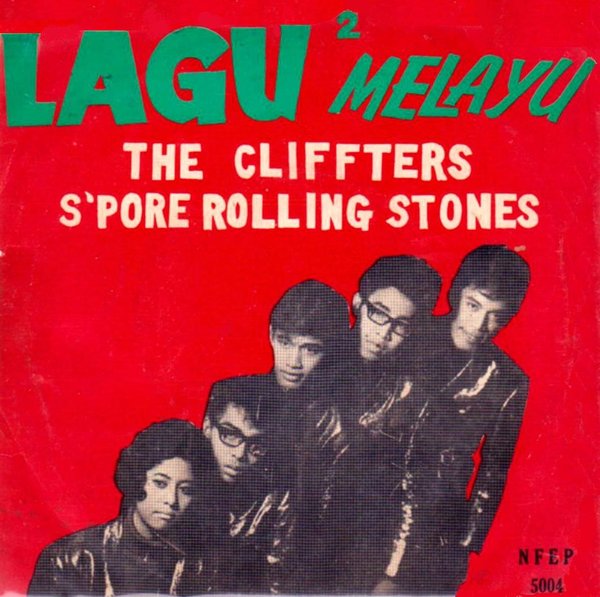
Between 1952 and 1955, Jasni became more active in recording, by singing many songs from the films acted by Ramlee, due to a crisis between Ramlee himself and the recording company who refused to provide the musical arrangements that he requested.  Nevertheless, Jasni managed to carve his own popularity by recording more songs. The last songs that he recorded were recorded in 1966 with the accompaniment of a Boyanese band called The Cliffters, Singapore's "Rolling Stones". 


The Cliffters consist of Bajuree brothers - Rickieno, Marstino, Jack and Alistini. They recorded under Ngee Fat's labels Chap Piring and Playboy. Besides Rickieno and Jasni, the band also recorded with M. Wari and June Abdullah under the same label, before moving to TNA Records. Later on, The Cliffters disbanded when Alistini and Wari recorded with The Fabian Boys and another singer named Norfizah. Alistini's songs "O Alek" and "Terona Taoa" were the first Boyanese songs to be recorded in Singapore throughout the history. 

Next on the list was Jaffar O. (1944 - 2010) [O = Ohjar]. Born in Bukit Timah, Singapore from a Boyanese-Madhurese parentage, he opted out of school at 14 to work as an office attendant. He recorded only two EPs with The Click IV on Olympic label, but his songs like "Punggok Rindukan Bulan" (The Owl Misses The Moon), "Merindu Kaseh" (Missing My Lover), "Kehampaanku" (My Disappointment), "Kasih Terpisah" (A Love Torn Apart) and "Undanglah Aku" (Invite Me) became instant hit. In his first EP, Jaffar also recorded a Boyanese number titled "Gagena Paraben". Throughout his life, he married four times, the last with Mahani Mohamad, a singer from the early 1970s.


The most celebrated Boyanese singer ever exist in the Malay entertainment circuit was Kassim Slamat. Born in 1931 in Sembawang district itself by the name of Kassim Rahmat, he began singing in wedding feasts in 1959 with Pemuda Ria party. He was given the name Kassim Slamat following the leading character of the same name in P. Ramlee's 1962 famous film "Ibu Mertuaku" (My Mother-In-Law). In 1966, he made his debut album with The Swallows, where his signature tune "Nga Lompak A-Go-Go" hit the country by storm. His unique approach by singing in Boyanese had made it appealing to the crowd. Another Boyanese song which managed to enter West Germany's top chart  (NOTE: this has been claimed many times- however, my friend Erwin is looking for hard evidence of this for his film about the Swallows - if anyone reading this has a chart clipping or magazine article that proves this, please leave a comment here! )  was "La A Obe", being recorded together with "Angkok Angkok Bilis" on an SP in 1967. His other famous songs in Boyanese include "La Karebna", "La Ngomber", "Lek Paju Molle", "Mak Itty Mak Illa" and "Sa Kilang Paki Kanchana". Due to popularity of "La A Obe", it was re-recorded in 1974 as a duet song by Ismail Haron and Anita Sarawak, but in different lyrics. Until today, "La A Obe" has been regarded as the Boyanese anthem. These Boyanese songs were written by The Swallows' drummer, Affendi Abdul Rahman, while the lyrics were provided by Kassim's brother, Yusoff Rahmat, who was also one of the band's guitarists. Both Kassim Slamat and The Swallows ended their career in 1969, in protest against record piracy.


The Swallows themselves had a hard time to be made recognized an accepted in the entertainment circuit, although they had been playing current English instrumentals in birthday parties since 1964. (The band decided to perform instrumentals partly because all its members could not speak, write and even sing in English.) In 1965, they appeared in the film "Sayang Si Buta" (The Love of The Blind" accompanying Ahmad Daud for his song "Si Manis Tujuh Belas" (Sweet Seventeen), and in another film called "Pusaka Pontianak" (The Vampire's Fortune) where they provided the musical back-up. In the same year too, they accompanied M. Bakri for the song "Malaysia Baru" (A New Malaysia). Only after Kassim Slamat came into the picture, the band started to gain its popularity. 
Besides Kassim Slamat, The Swallows also backed up Kartina Dahari and Rafeah Buang for one EP each. 

Boyanese songs disappeared from the public ears after the mid-1970s onwards as the community itself has been assimiliating into the Malay culture as time goes by. Nevertheless, the revival of the pop-yeh-yeh music in 1985 made the songs re-appeared in the market, at least in re-recorded version. The latest new Boyanese song recorded was in 1992 by Jeffridin in his new album "Mas Mona"; and the song was "Akabina".

The utmost effort in preserving the Boyanese identity in foreign lands is done by the said community in Singapore, through Persatuan Bawean Singapura, where the association continuously organizes many activities with the purpose of getting the people of the community together. It is a close-knit community and have affiliation with their counterparts in Indonesia's Bawean Island.

Ghaz, KL

Wednesday, August 1, 2012

a really great singer has left us... rest in peace Anis Es

I was told yesterday that encik Anis Es passed away recently... rest in peace Anis Es.... al fatihah


Tuesday, July 24, 2012

Saloma


All biographical info in this post was quoted directly from From Blitz2000 

(more great information about the great Tan Sri P Ramlee can be found here : http://www.p-ramlee.com/)


BIOGRAPHY

Salmah binti Ismail or better known as Saloma (22 January 1935 - 25 April 1983) was a Malaysian film actress and singer. She was the third wife of the film actor, director, singer and songwriter Tan Sri P.Ramlee. 

Salmah was born on 22 January 1935 at Pasir Panjang Singapore.  Coming from a family with artistic leanings (both her sisters Mimi Loma and Mariani were famous actresses on their own right), she displayed [acting] talents of her own as a singer at weddings and family events at 13.

As she became more well-known in Singapore she joined the Panca Sitara Group, a band of musicians under the leadership of P. Ramlee. Around this time she also sang with the Kalung Senandung Group at Radio Singapura and entertained acting offers in musical films of the era, usually playing P.Ramlee's love interest and/or the village ingenué.


Legend has it that her stage name was coined by Run Run Shaw of Shaw Bros when the film  Saloma which starred Rita Hayworth hit the box office. Other opinions favored the story that the name was given to her by her future husband P. Ramlee. They were married in 1961 and were widely regarded as the first true power couple  of the Malaysian film industry.  


Apart from her artistry, Saloma was also famous as a screen beauty: her hourglass figure, magnificent hairdos and iconic kebaya dresses were copied by young ladies of the 60's.

Saloma's voice is best described by the Malay adage lemak merdu (literally meaning fat-melodious), a term connotating a sensuous honey-thick flow of sound with a lot of overtones. Although capable of perfectly executed high notes, usually her songs employed her middle voice, which was a creamy mezzo-soprano  capable of transcending such genres as jazz, cha-cha, pop, and traditional Malay folk. 


The beauty of her voice was such that P. Ramlee once remarked he could not envision his songs sung by singers any other than Saloma. Their creative partnership in film and music was still unmatched in Malaysia today. Her contributions to Malaysian art was such that she was credited as Biduanita in the credits of her films, the term being equivalent to Italian prima donna assoluta. This was cemented by her awards Ahli Mangku Negara (1975) and Biduanita Negara (1979) respectively. Saloma was considered predecessor to such singers as Sharifah Aini and Rafeah Buang in terms of vocal type, repertoire and in setting a very high standard for Malaysian female vocalists.

Saloma survived P. Ramlee by a decade and continued singing in television programs and film soundtrack until the 80's.

Saloma died on 25 April 1983 at Assunta Hospital, Petaling Jaya Selangor Malaysia  from liver failure associated with jaundice. She was buried at Jalan Ampang Muslim Cementery Kuala Lumpur next to the grave of her husband, P.Ramlee .


 In 2003, in honour of her contributions to the Malaysian entertainment industry, the Saloma Bistro  was set up in Jalan Ampang Kuala Lumpur.

Song
Saloma's solo works frequently features in the soundtracks of her film. Her voice was also sometimes used in dubbing, for example the female part ofTaman Firdausi from Nasib Do Re Mi.
  • Mengapa Dirindu
  • Kain Songket
  • Bunga Tanjung
  • Hilang Terang Timbul Gelap
  • Perwira
  • Tiru Macam Saya
  • Inang Baru
  • Bila Larut Malam
  • Keroncong Singapura
  • Tiga Abdul
  • Aci Aci Buka Pintu
  • Lagu Anak Rantau
  • Bila Hati Telah Retak
  • Tari Silat Melayu
  • Bossanova
  • Selamat Hari Raya
  • Kuala Lumpur
  • Kelohan
She also frequently partners P. Ramlee in memorable duets such as:
  • Gelora
  • Malam Ku Bermimpi
  • Burung Pungguk
  • Di Mana Suara Burung Kenari
  • Hancur Badan di Kandung Badan
  • Joget Malaysia
  • Rukun Islam
  • Sri Bulan
  • Jikalau Ku tahu
  • Bahagia
  • Saat yang Bahagia
  • Dalam Air Terbayang Wajah
  • Sedangkan Lidah Lagi Tergigit
Films,
  • Seniman Bujang Lapok
  • Ragam P. Ramlee
  • Sabaruddin Tukang Kasut
  • Bila Hati Telah Retak
  • Si Tanggang
  • Ahmad Albab
  • and many more.... 

 Related source : Wikipedia

Tuesday, July 10, 2012

Anis Es recovering after illness


I recently read online somewhere that legendary Pop Yeh Yeh singer Anis Es has been ill lately.
I was worried to see a photo of him in the hospital on respirator, but apparently he has been discharged from the hospital more recently.

Saying prayers for his speedy recovery.

Here is a song from an EP he recorded with Orkes P.I.B. - "Cincin Suasa" (Copper Ring)